
Professional interior painting in Appleton, Wisconsin. Paint jobs that look good up close, not just from across the room.
Most people don’t paint rooms for fun. You paint because the walls look terrible, you’re selling the house, or you’re tired of the builder-beige from 1997.
A Plus Help handles interior painting for homes in Appleton, Neenah, Menasha, and the Fox Valley. We prep properly (the part everyone skips), cut clean lines at ceilings and trim, and apply paint that actually covers in the number of coats we quoted.
We’re talking crisp edges where wall color meets ceiling white, no roller marks visible in afternoon light, and paint that doesn’t chip off trim when you clean it three months later.
Whether you need one bedroom repainted, the entire main floor refreshed, or a whole-house color update before listing—we prep, paint, and clean up so the finished room looks professional instead of “my brother-in-law did it for beer money.”
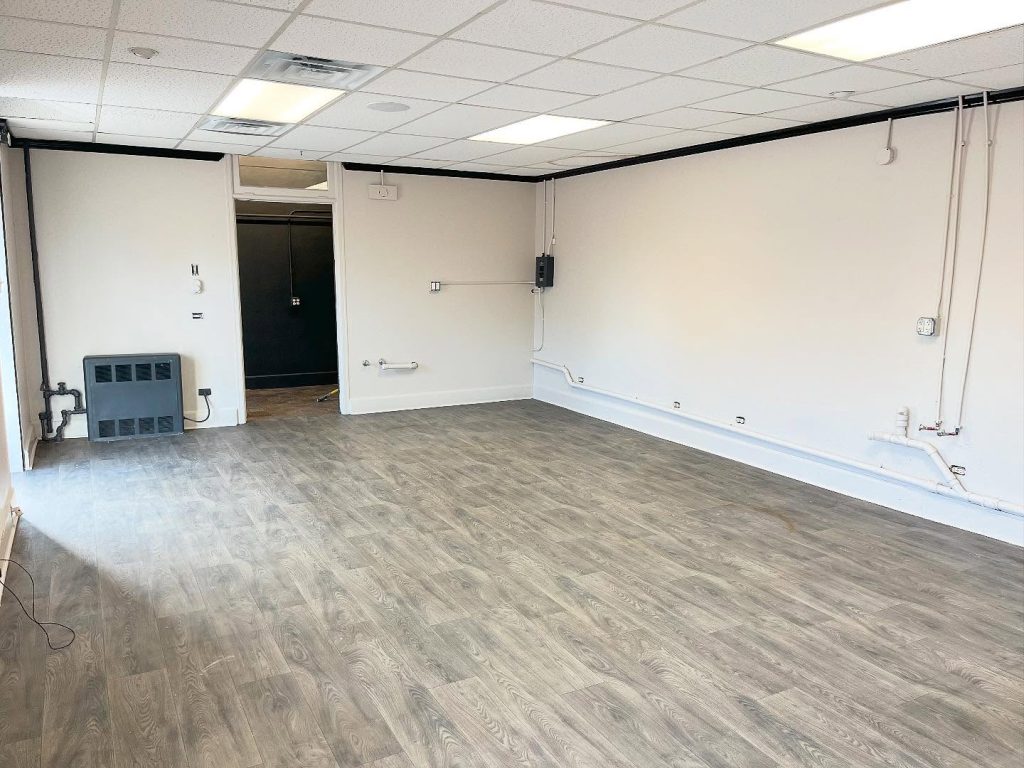
Single rooms or multiple rooms. Walls, ceilings, trim, doors, closets. We paint what needs painting and protect everything that doesn’t.
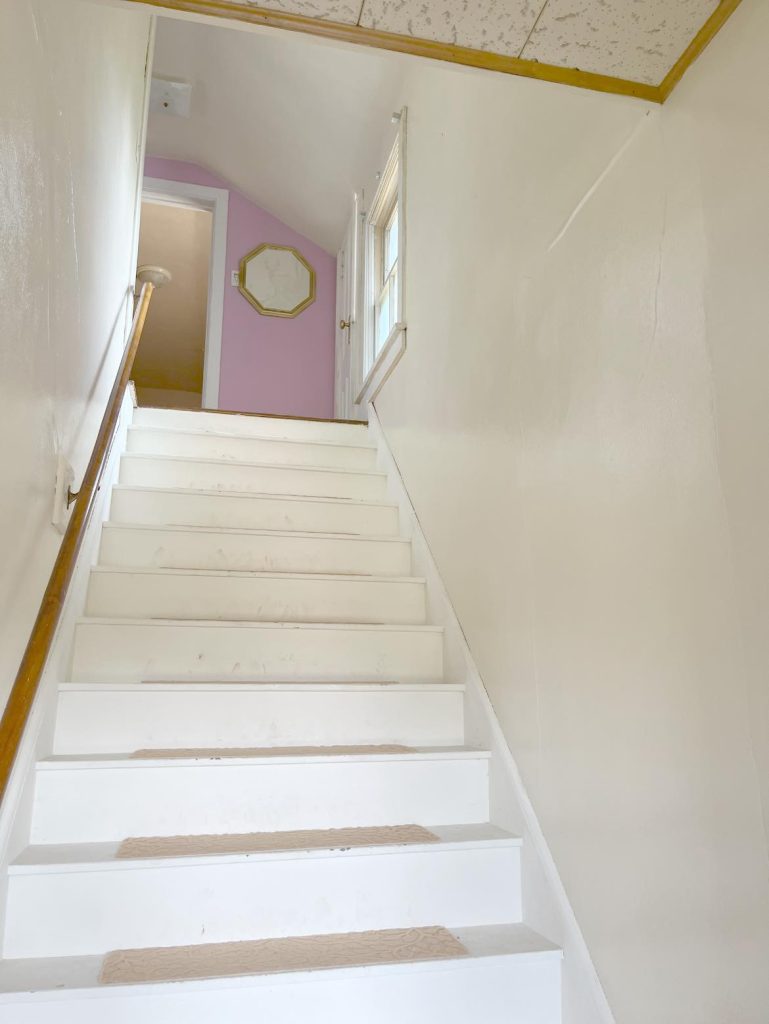
Complete interior repaint—every wall, ceiling, trim, and door. Popular before selling house or after moving into new-to-you home with previous owner’s terrible color choices.
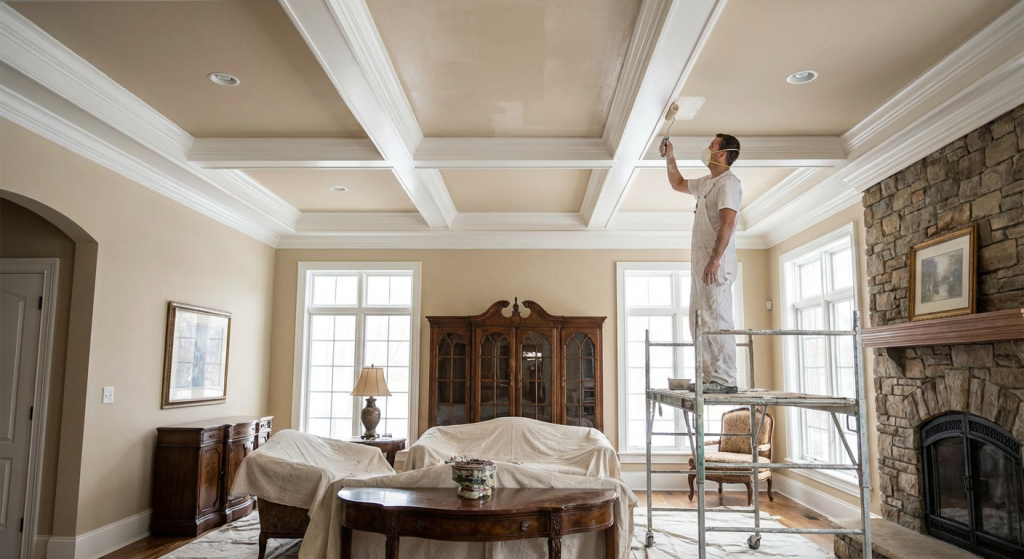
Ceilings yellow from age, show water stains from old leaks, or look dingy next to freshly painted walls. Fresh ceiling paint brightens entire room.
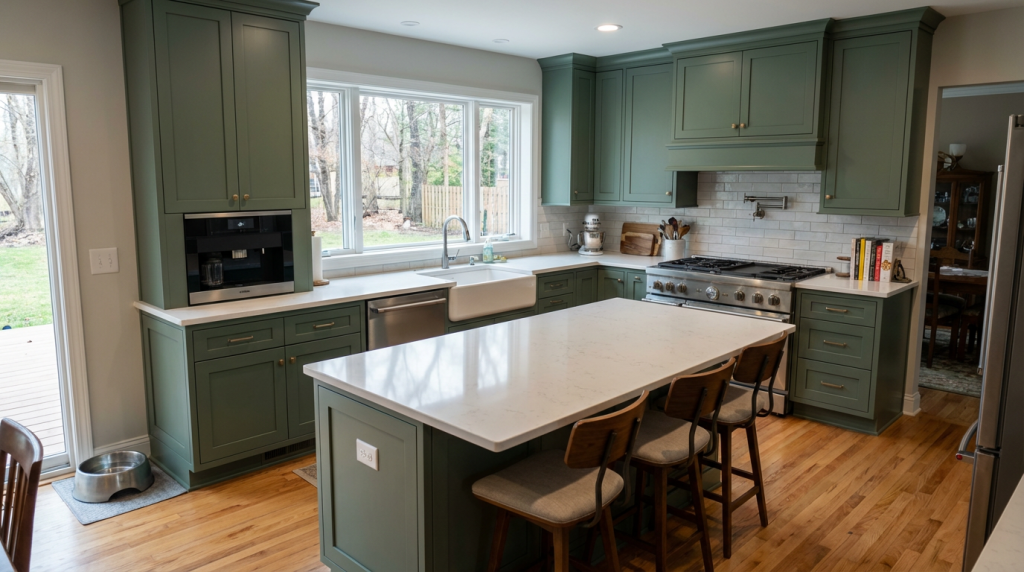
Kitchen or bathroom cabinets looking dated? Cabinet painting costs 10-20% of replacement and updates look completely.
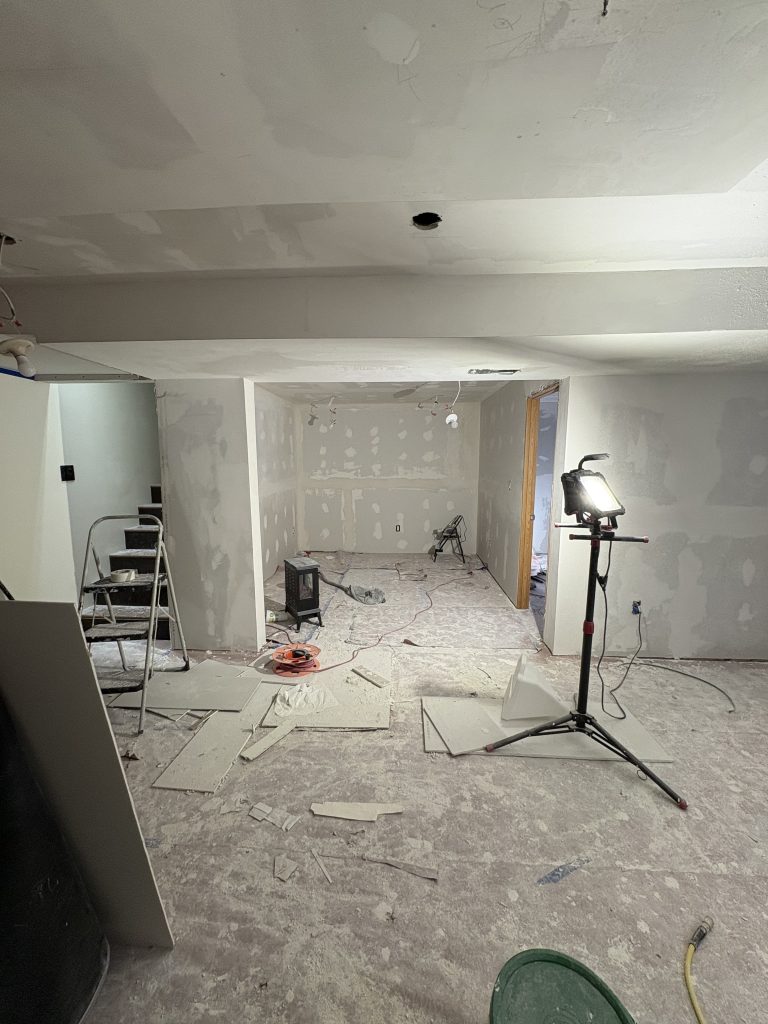
Orange peel, knockdown, and skip trowel textures require specific painting techniques. Smooth-wall painting methods don’t work on heavy texture.
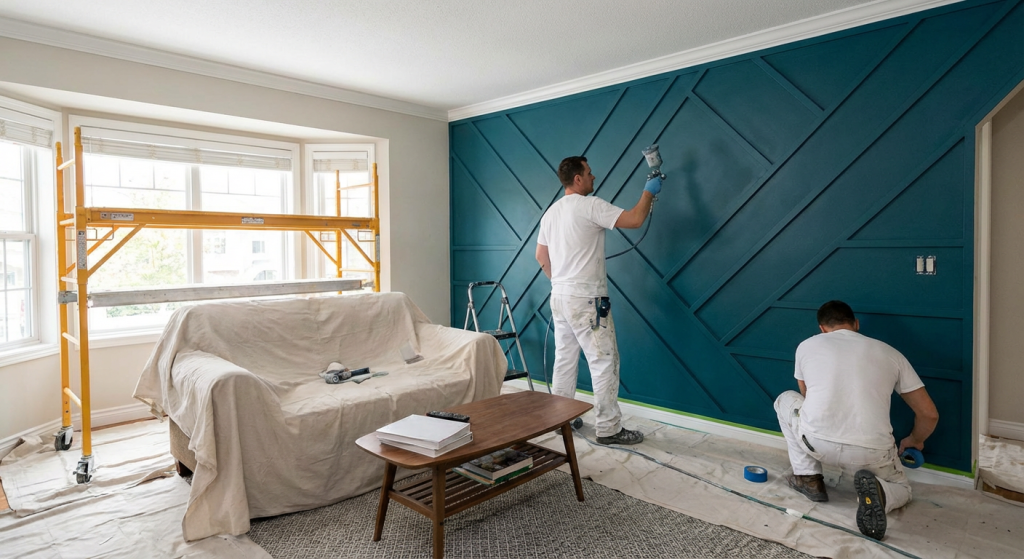
One wall different color from other three. Creates focal point, adds visual interest, or defines space in open floor plan.
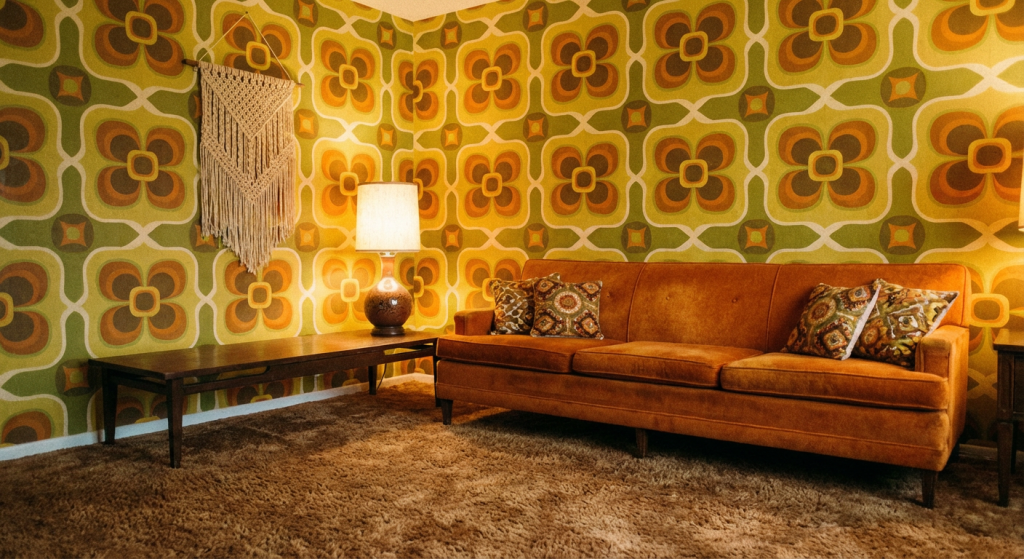
Wallpaper from 1985 finally needs to go. Removing wallpaper correctly prevents wall damage that costs more to repair than removal.
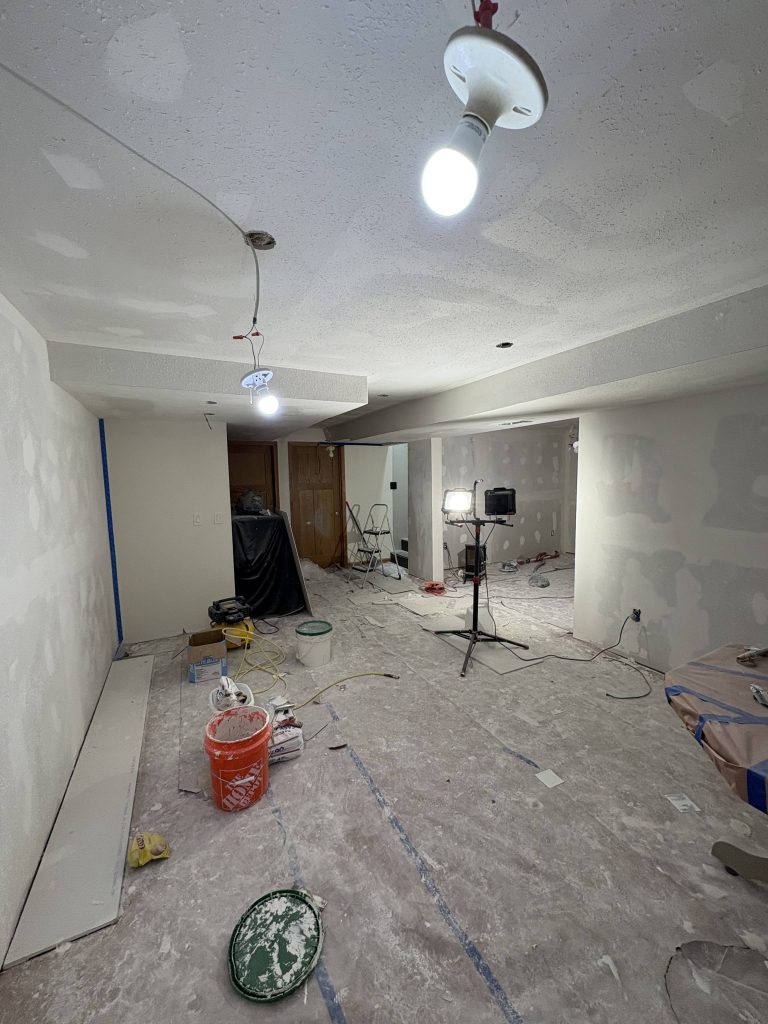
You can absolutely paint your own interior. Big-box stores sell everything needed. YouTube has tutorials. Your college roommate did his whole apartment in a weekend.
Here’s what actually happens with DIY interior painting:
Saturday morning: You’re motivated. Tape up trim, drop cloths down, crack open paint. This is easy—professionals charge how much for this?
Saturday afternoon: First wall done. Looks… fine. Maybe some roller marks visible in the light but probably just needs second coat.
Saturday evening: Two walls finished. Back hurts from awkward ladder angles. Tape pulled some paint off in one spot. You’ll fix it tomorrow.
Sunday morning: Paint everything visible in late afternoon sun. Those roller marks are obvious now. Edge where wall meets ceiling isn’t straight. One section looks lighter because you didn’t mix paint between cans.
Sunday afternoon: Removing tape pulls fresh paint off in three places. Drips on trim you didn’t notice are now dry and won’t wipe off. Second coat helps coverage but doesn’t fix technique problems. Room looks “fine” but not good.
Monday: Move furniture back. Notice missed spot behind where dresser was. See wavy line along ceiling you didn’t notice before. Realize you hate the color now that it covers entire wall instead of small sample square.
Next weekend: Touch up mistakes, which creates new problems because touching up matte paint with same paint from same can still shows where you touched up.
Two months later: Call professional painter to fix DIY attempt before listing house because your realtor politely suggested the paint “could use freshening up.”
We fix a lot of DIY paint jobs. No judgment—most people underestimate how much skill, equipment, and time professional painting requires.
We visit your Appleton home to evaluate your basement space, discuss your vision, measure dimensions, assess moisture conditions, review electrical and plumbing access points, and answer your questions about the basement remodeling process.
Our contractors create a detailed basement finishing plan including layout design, material selections, building code compliance, egress window requirements, HVAC considerations, and timeline projections.
You receive a comprehensive written estimate detailing all labor, materials, permits, and associated costs. No hidden fees. No surprises. Just honest pricing for your basement renovation project.
We handle all building permit applications required by the City of Appleton and Outagamie County. Our work meets Wisconsin residential building codes, electrical codes, plumbing regulations, and egress requirements.
Our experienced crew completes your basement finishing project with attention to detail and quality craftsmanship. We maintain clean work areas, protect your home, communicate progress regularly, and address any questions during construction.
We don't consider the job complete until you're completely satisfied. Our final walkthrough ensures every detail meets your expectations and our quality standards.

✓ Single small room (bedroom, bathroom)
✓ You’re comfortable on ladder
✓ Walls in good condition (minimal prep needed)
✓ You have time (painting takes 2-3x longer than you estimate)
✓ You’re keeping existing color or making minor change
✓ You have painting experience
✓ You own or can borrow quality equipment
✗ Multiple rooms or whole house
✗ Tall ceilings or vaulted spaces (safety issue)
✗ Extensive prep needed (repairs, stain blocking, wallpaper removal)
✗ You want smooth, professional results
✗ Your time is worth more than cost difference
✗ Drastic color change requiring perfect coverage
✗ Trim and doors need painting (tedious, shows mistakes)
✗ You tried DIY before and hated the result
Per room:
Bedroom: $350-550
Living room: $600-900
Kitchen (walls only): $500-800
Bathroom: $300-450
Hallway: $200-400
Whole house (walls and ceilings, no trim):
1,200 sq ft: $3,000-5,500
2,000 sq ft: $5,000-9,000
3,000 sq ft: $7,500-13,500
Adding trim painting: +30-50% to whole house cost
Pricing factors:
Get written estimate with scope clearly defined. “Painting living room” could mean walls only, or walls/ceiling/trim depending on what estimate specifies.
Walls: 5-10 years depending on traffic, wear, paint quality, and cleaning habits
Ceilings: 10-15 years (less wear than walls)
Trim: 7-12 years (higher traffic, more scuffs and cleaning)
Signs paint needs refreshing:
Quality paint lasts longer than cheap paint. Sherwin-Williams Duration or Benjamin Moore Regal looks better longer than Behr from Home Depot.
High-traffic areas need repainting more frequently – hallways, stairwells, kids’ rooms wear faster than guest bedroom.
Our top picks:
Best overall: Sherwin-Williams Duration – Excellent coverage, durability, and washability. Eggshell or satin sheen for walls. Costs more but worth it for high-traffic areas.
Best value: Sherwin-Williams ProMar 200 – Good coverage and durability at lower price than Duration. Contractor-grade quality without premium price.
Premium option: Benjamin Moore Aura – Superior coverage and color retention. Expensive but fewest coats needed and looks great for years.
Budget-friendly: Benjamin Moore Ben – Good quality at accessible price. Better than big-box brands, less expensive than premium lines.
Avoid: Behr, Glidden, Valspar (big-box brands). Poor coverage means more coats needed, negating lower price. Color inconsistency between batches. Less durable.
Sheen recommendations:
Flat – Ceilings, low-traffic bedrooms. Hides imperfections but not washable.
Eggshell – Most walls. Slight sheen, washable, hides minor imperfections. Best all-around choice.
Satin – Kitchens, bathrooms, hallways, kids’ rooms. More washable than eggshell. Shows wall imperfections more.
Semi-gloss – Trim only. Very washable but shows every wall imperfection.
Single room: 1-2 days
Whole house: 5-14 days depending on size
Timeline factors:
Dry time between coats – Usually 2-4 hours minimum. We often apply first coat in morning, second coat afternoon same day if conditions allow.
Prep work – Extensive repairs, wallpaper removal, or stain blocking adds time. Could add 1-3 days before painting starts.
Number of coats – Two coats is standard. Drastic color changes need three.
Crew size – Two-person crew works faster than one person (obvious but worth stating).
Access – Empty house paints faster than fully furnished, packed, occupied home.
Drying/curing – Light use after 24 hours, full cure in 30 days. Don’t scrub walls or lean furniture against freshly painted walls for at least a week.
We work around your schedule – Paint bedrooms in sequence so someone can sleep somewhere. Paint kitchen on weekend so you have access during week. Schedule to minimize disruption.
We move most furniture to room center and cover with plastic. You don’t need to empty rooms completely.
What we can’t move:
What helps:
Clear small items off furniture tops (lamps, photos, decor), empty closets if painting closet interiors, remove wall decorations and nails/hooks, and move valuable items you don’t want plastic-covered.
We’re careful but we’re not antique movers. If piece is irreplaceable or extremely valuable, move it yourself to another room before we arrive.
Alternative: Empty rooms paint faster and cost less (less moving time, better access). If you’re able to empty rooms beforehand, timeline shortens and you save money.
Yes, with proper conditions.
Requirements:
Temperature: 50-85°F during application and drying. Most homes maintain this in winter with normal heating.
Humidity: Below 70% ideally. Winter humidity in heated homes is usually low (dry air).
Ventilation: Need to ventilate during painting without freezing house. Crack windows in painted room if possible; run ventilation fans.
Winter painting advantages:
✓ Indoor temperature controlled year-round (unlike exterior painting)
✓ Off-season scheduling (easier to book)
✓ House occupied less (holidays, kids at school, people actually want us there when it’s cold outside)
Winter painting challenges:
✗ Opening windows for ventilation lets in cold air
✗ Tracking snow/salt into house (we use floor protection and remove boots)
✗ Paint needs warm storage (we don’t leave paint in truck overnight in Wisconsin winter)
Bottom line: Interior painting works fine in winter. Temperature-controlled environment indoors means season doesn’t matter much.
All paint has odor during application and drying.
Low-VOC and zero-VOC paints reduce smell significantly but don’t eliminate it completely. “Zero-VOC” refers to solvent content, not smell—paint still smells while wet.
Minimize paint odor:
Ventilation – Open windows if weather allows, run bathroom fans, use box fans to move air.
Low-VOC paint – Specify low-VOC if smell sensitivity is concern. Sherwin-Williams Duration and Benjamin Moore Aura are both low-VOC.
Timing – Paint when you can leave house for several hours during drying (day trip, overnight elsewhere).
Fans and air purifiers – Speed up off-gassing and reduce airborne particles.
Smell duration:
Water-based paint: Noticeable smell during application and 2-4 hours after. Mild smell for 24-48 hours. Fully dissipates within a week.
Oil-based paint/primer: Strong smell during application and 6-12 hours after. Noticeable smell for 2-3 days. Complete off-gassing takes 1-2 weeks.
Sensitive individuals (pregnancy, asthma, chemical sensitivities) should avoid area during application and drying. Plan to stay elsewhere during painting if severely sensitive.
Yes, if:
✓ You have leftover paint with color information on can
✓ Sample of existing color can be taken to paint store for matching
✓ Color is standard paint-store color (not custom mix lost to history)
Matching process:
Best case: You have original paint can with color formula. We buy exact color.
Good case: Paint store scans paint chip or sample from your wall and formulates match (90-95% accurate).
Difficult case: Custom color from 15 years ago with no record. Paint store matches as close as possible but may not be perfect (faded paint, changed formulation, human color perception variation).
Touch-up reality: Even perfect color match sometimes looks different due to paint sheen change (old paint oxidizes and changes sheen over time), painted surface aging and dirt accumulation, lighting differences, and adjacent color contrast.
Best practice for touch-ups: Repaint entire wall or section between natural breaks (corner to corner, floor to ceiling). Spot touch-ups often visible even with “matching” paint.
Keep leftover paint from any professional paint job. Label can with room and date. Makes future touch-ups possible and eliminates matching guesswork.
Clear wall decorations – Remove pictures, mirrors, wall art, shelving, nails, and hooks. We can remove these but you know what’s valuable and what’s fragile.
Small items – Clear tops of furniture (lamps, decor, knick-knacks). Easier for you to organize than us.
Closets – Empty if painting closet interiors. Leave as-is if not painting inside closets.
Valuables – Move jewelry, firearms, medications, important documents to secure location. We’re trustworthy and insured but better safe than sorry.
Floor clearing – We move furniture but clearing floor of toys, shoes, clutter speeds process.
Pets – Secure pets in separate room or outside during work day. Painting involves open doors, ladders, equipment, chemicals. Dog running through wet paint or cat jumping on ladder isn’t good for anyone.
Access – Unlock rooms needing painting, provide garage access if storing furniture temporarily, and leave key or arrange access if you won’t be home.
Ventilation – We ventilate but additional air flow helps. Turn on bathroom fans, crack windows if weather allows.
Stay clear – Rooms being painted aren’t accessible during work day. Plan accordingly for bathrooms, kitchens, bedrooms.
Questions – Call or text during day if concerns arise. Don’t wait until project complete to mention issues.
Inspection – Stop by during project to see progress if you want. We’re fine with oversight—transparency builds trust.
Drying time – 24 hours before touching walls, moving furniture against walls, hanging pictures. Full cure takes 30 days—avoid scrubbing or heavy contact during this time.
Smell – Dissipates in 24-48 hours with ventilation. Use fans and open windows to speed process.
Touch-ups – We handle touch-ups during final walkthrough. Point out any areas needing attention while we’re there with tools and paint.
Leftover paint – Store properly (tightly sealed can, temperature-controlled location). Write room name and date on lid. Good for touch-ups for 2-3 years if stored correctly.
Maintenance – Clean walls gently with damp cloth and mild soap. Avoid abrasive cleaners or scrubbing that removes paint. Touch up scuffs and marks as they occur rather than letting damage accumulate.
At A Plus Help, we proudly provide professional handyman and home remodeling services to homeowners and businesses throughout Wisconsin’s Fox Valley. From residential handyman repairs in Appleton to commercial maintenance in Neenah, we bring the same level of care, attention to detail, and quality service wherever we go in the Fox Valley.
Stop looking at that builder beige from 2003. Or the accent wall that seemed like great idea but you’ve hated for three years. Or the scuffed, marked-up hallway that’s embarrassing when guests visit.
A Plus Help handles interior painting throughout Appleton and the Fox Valley—single rooms or whole house, walls or complete interiors including trim and ceilings.
You want: