
Your floors are the foundation of every room—literally the surface you walk on, live on, and judge every day. When they’re installed right, you don’t think about them. When they’re installed wrong, you notice every gap, creak, bubble, and uneven transition.
A Plus Help handles flooring installation throughout Appleton, Neenah, Menasha, and the Fox Valley. We install luxury vinyl plank (LVP), laminate, engineered hardwood, tile, and we handle the subfloor prep that separates professional installation from amateur disasters.
We’re talking floors that lay flat without waves, planks that lock tight without gaps, transitions that don’t create trip hazards, and finished rooms that actually look level and professional.
Whether you’re updating one room or replacing flooring throughout your entire house—we install it correctly the first time.
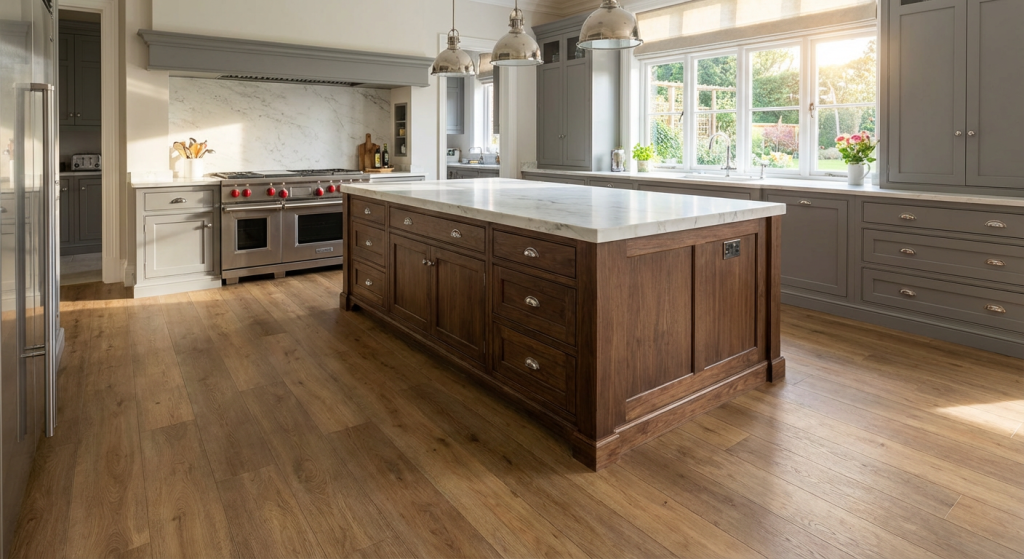
LVP is the most popular residential flooring right now—looks like hardwood, costs less, handles moisture, and actually works in Wisconsin basements. It’s durable, easy to maintain, and available in hundreds of styles.
Popular LVP brands we install:
CoreLux
COREtec
LifeProof
Shaw Floorte
Mohawk RevWood
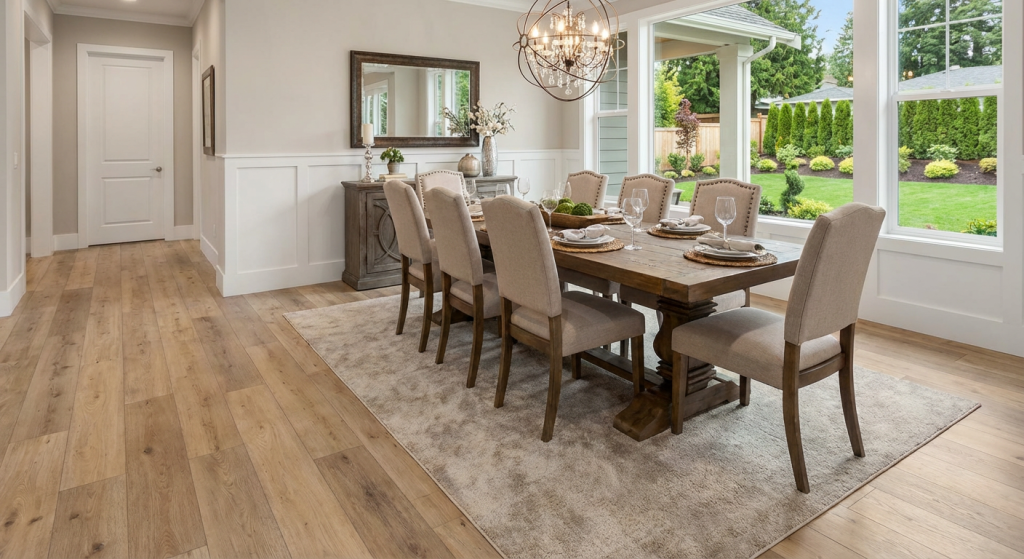
Laminate looks like hardwood but costs less and resists scratches better. It’s not waterproof (unlike LVP), so it doesn’t work in basements or bathrooms, but it’s excellent for bedrooms, living rooms, and dining rooms.
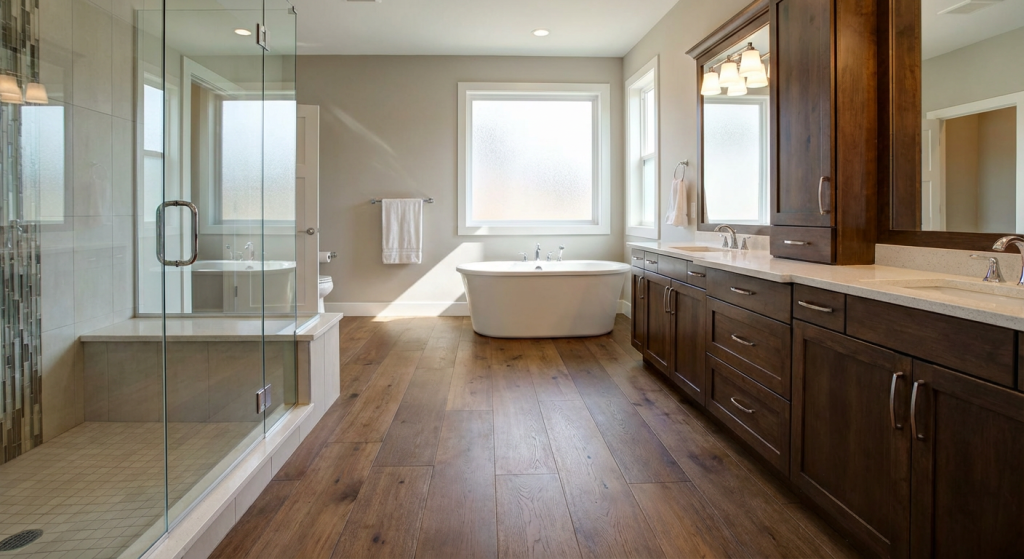
Engineered hardwood has real wood veneer on top (so it looks exactly like solid hardwood) with plywood base layers (so it’s more stable and moisture-resistant than solid hardwood). It’s the compromise between authentic hardwood appearance and practical durability.
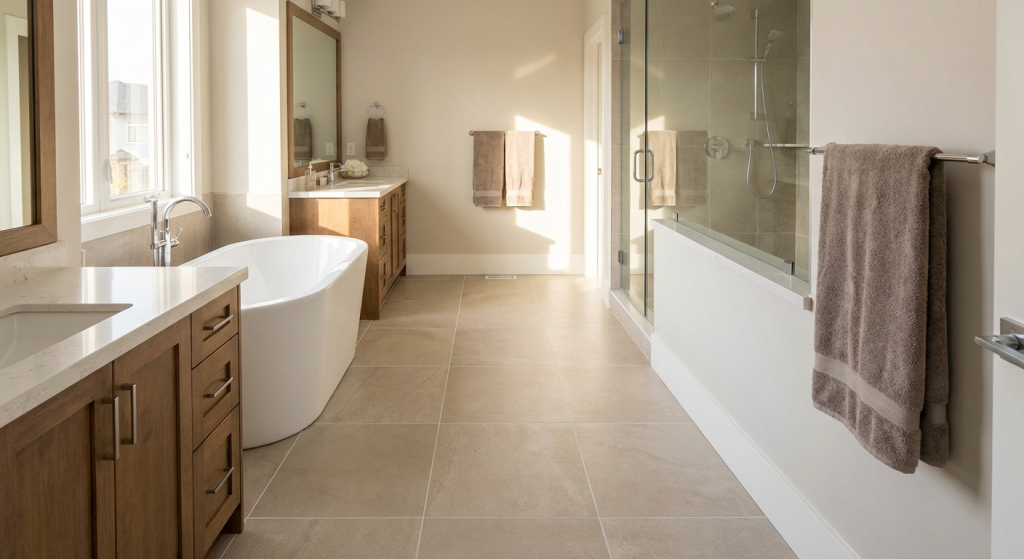
Ceramic and porcelain tile for bathrooms, entryways, laundry rooms, and kitchens. Tile is 100% waterproof, incredibly durable, and virtually maintenance-free—but requires skilled installation and costs more.
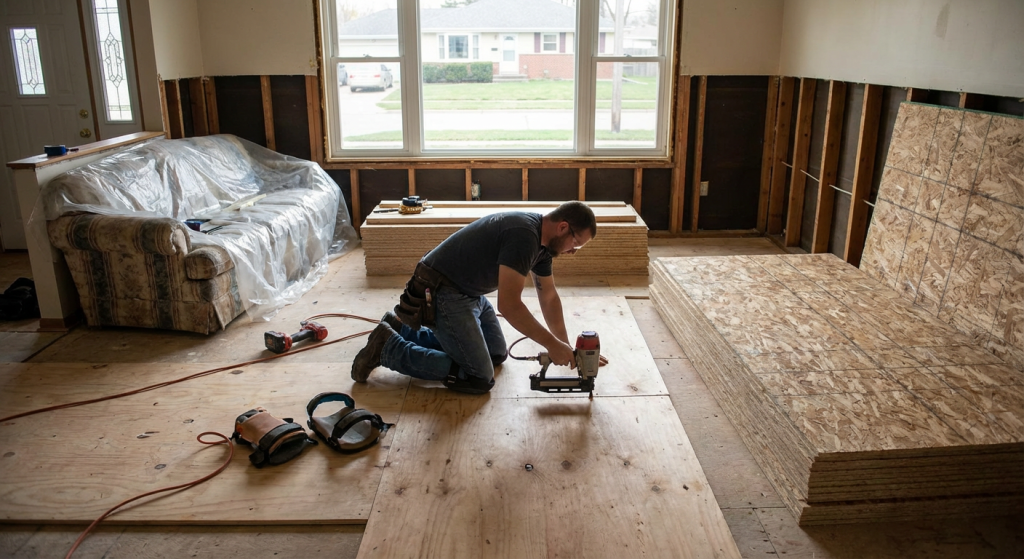
Perfect flooring over terrible subfloor still looks terrible. Subfloor determines whether your new floor lays flat, stays quiet, and lasts decades or develops problems immediately.
Common subfloor problems:
Uneven surfaces
Squeaky floors
Water damage
Missing or damaged subfloor
Concrete issues
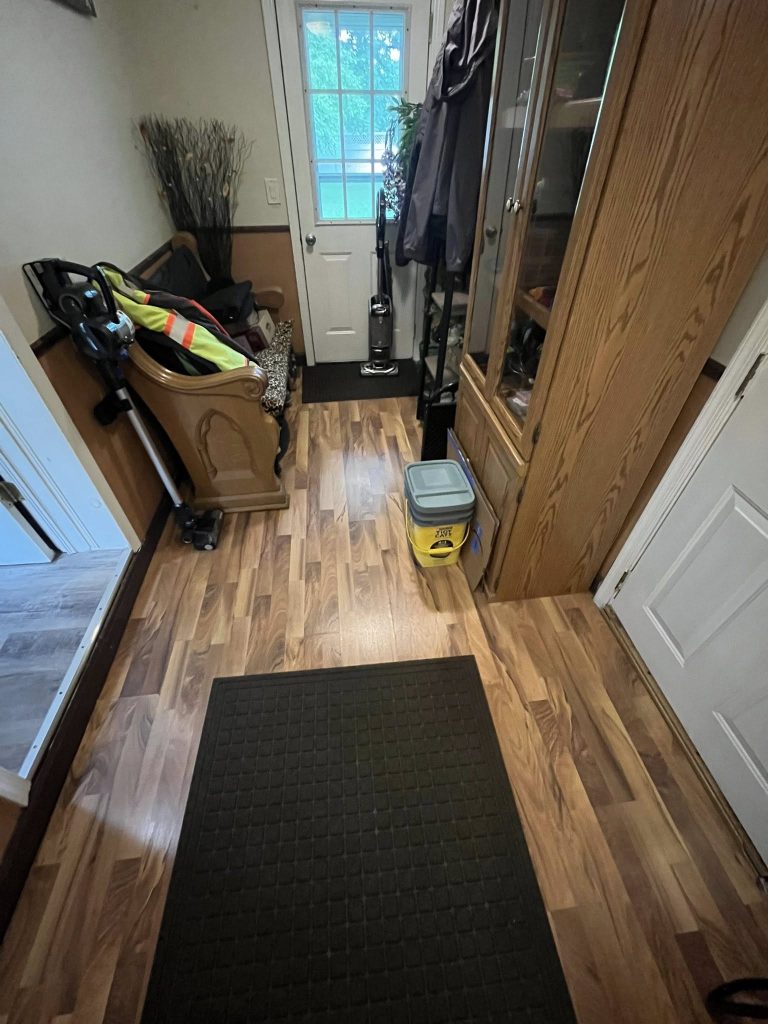
Before installing new flooring, old flooring has to go. We remove carpet, tile, vinyl, laminate, hardwood—whatever you’re replacing—and haul it away.
Removal services:
Carpet removal
Tile removal
Vinyl/linoleum removal
Laminate/LVP removal
Hardwood removal
Disposal
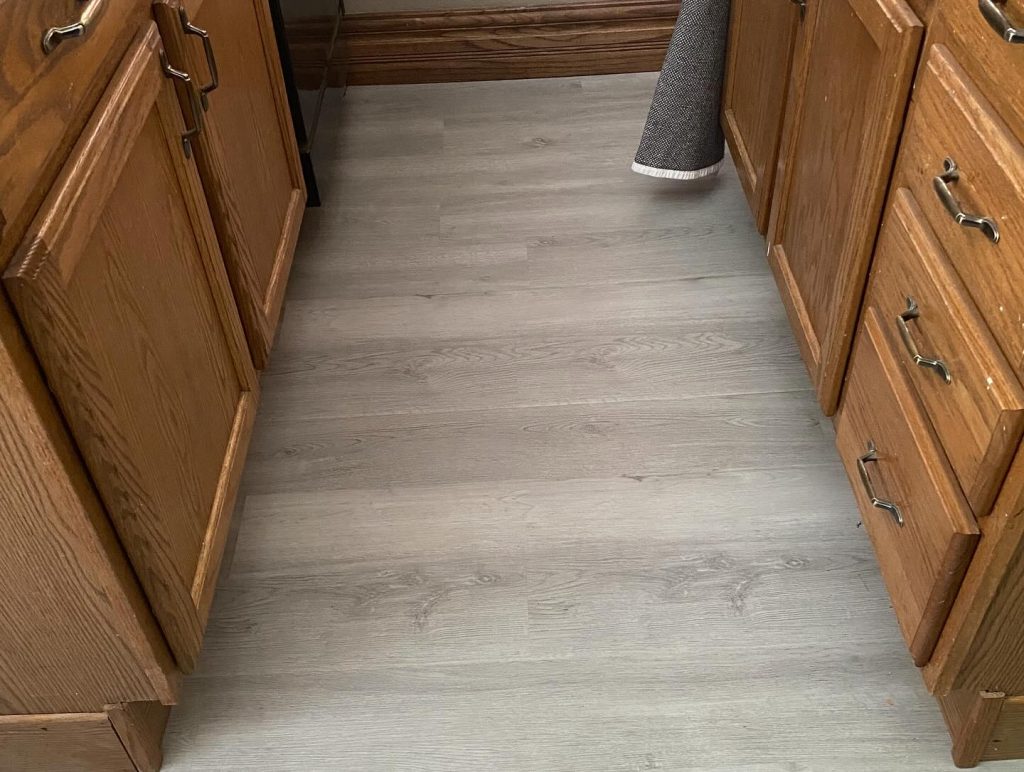
Flooring is the largest visible surface in any room. Updated floors transform spaces instantly—modern LVP or tile makes 1990s carpet rooms feel new again. Flooring updates return 70-80% of cost when selling and often make the difference in buyer decisions.
Carpet wears thin, stains permanently, and traps allergens. Laminate chips and water-damages. Old vinyl cracks and peels. Hardwood scratches and finishes wear through. At some point repair isn’t worth it—replacement makes more sense.
Water-damaged flooring grows mold underneath. Carpet in basements traps moisture and smells musty. Replacing with waterproof LVP or tile eliminates moisture problems and improves air quality.
Modern flooring requires less maintenance than old options. LVP needs sweeping and damp mopping (no carpet shampooing, no hardwood refinishing, no grout sealing). Less maintenance means more time living instead of cleaning.
We visit your home to measure rooms accurately, assess subfloor condition, and discuss flooring preferences (style, durability needs, moisture concerns, budget). We explain options honestly—what works for your situation vs. what doesn't. You get detailed written estimate including materials, labor, subfloor prep, removal if needed, and timeline.
We help you choose specific products (color, texture, quality level) from suppliers or install materials you've already purchased. We order materials with 10% overage for cuts and future repairs. Lead times vary—some products ship in days, others take 2-3 weeks.
You remove furniture and breakables from installation rooms (or we can move for additional fee). We protect adjacent areas with plastic and floor protection. Materials acclimate in installation space 48 hours minimum.
We remove existing flooring if needed, haul away debris, and assess subfloor thoroughly. We repair damage, secure loose areas, and level surface to manufacturer specifications. This step takes 1-2 days depending on subfloor condition—we don't rush it.
We install new flooring starting from optimal point in room, maintaining proper spacing and pattern, cutting precisely around obstacles and doorways, and checking level and alignment constantly. Installation speed depends on room size and complexity—simple rectangular room goes faster than kitchen with cabinets and appliances.
We clean new flooring thoroughly, vacuum all dust and debris, remove protective coverings from adjacent areas, and haul away trash. We walk through with you to ensure satisfaction and explain care/maintenance requirements before we leave.
We don’t install flooring over questionable subfloors. Damaged or uneven subfloors cause squeaks, separation, cracking, and premature failure. We fix subfloor problems before installation—costs more upfront, saves thousands in replacement costs later.
Flooring manufacturers void warranties for improper installation. We follow acclimation requirements, expansion gap specifications, substrate prep standards, and installation methods. Your warranty stays valid because installation meets requirements.
Gaps between planks, uneven transitions, visible seams, and wavy floors are signs of rushed installation. We take time to do it right—tight joints, smooth transitions, level surface, professional appearance.
We account for material lead times, acclimation periods, subfloor prep, and installation complexity. Our timeline estimates are realistic—not “best case if everything goes perfect” fantasies that never happen.
Typical installed costs for Appleton area:
Luxury Vinyl Plank (LVP): $4-8 per square foot installed
Laminate: $3-7 per square foot installed
Engineered Hardwood: $6-12 per square foot installed
Tile (ceramic/porcelain): $8-15 per square foot installed
Carpet: $3-6 per square foot installed (we don’t install carpet but can refer)
Average room costs (12×12 = 144 sq ft):
LVP: $575-1,150
Laminate: $430-1,000
Engineered hardwood: $865-1,730
Tile: $1,150-2,160
Pricing includes:
Additional costs:
We provide exact pricing after measuring your space and assessing subfloor.
Typical timelines:
Single room (150 sq ft): 1-2 days
Multiple rooms (500 sq ft): 2-4 days
Whole house (1,500 sq ft): 5-8 days
Timeline includes removal, subfloor prep, acclimation time, installation, and trim work. Complex layouts or extensive subfloor repairs extend timeline.
You can walk on LVP/laminate immediately after installation. Tile needs 24 hours before walking, 72 hours before furniture.
Depends on “durable” definition:
Scratch resistance: Tile > Laminate > LVP > Engineered hardwood
Water resistance: Tile = LVP (both waterproof) > Engineered hardwood (water-resistant) > Laminate (not waterproof)
Lifespan: Tile (30+ years) > Engineered hardwood (20-30 years) > LVP (15-25 years) > Laminate (10-20 years)
Refinish-ability: Engineered hardwood (1-2 times if thick wear layer) > Everything else (can’t be refinished)
For Wisconsin homes with dogs and kids: LVP offers best combination of durability, water-resistance, cost, and ease of maintenance.
Sometimes, but usually not recommended:
LVP/Laminate over vinyl: Possible if vinyl is smooth, fully adhered, and level. We assess condition—any bubbles, tears, or unevenness requires removal.
LVP over ceramic tile: Possible if tile is level and firmly attached. We fill grout lines with floor patch to create smooth surface. Adds floor height (consider door clearance and transitions).
Over carpet: No. Always remove carpet first.
Over hardwood: Usually remove it (hardwood has value and can be refinished). If hardwood is damaged beyond repair, we can install over it after leveling.
Why removal is usually better:
We recommend removal unless there’s compelling reason not to.
Depends on flooring type and subfloor:
LVP: Some has attached pad (no underlayment needed). Some requires separate underlayment. Always use moisture barrier over concrete.
Laminate: Always requires foam underlayment (never attached). Reduces sound and smooths minor imperfections.
Engineered hardwood (floating): Requires underlayment per manufacturer specs.
Tile: No underlayment—installed directly on cement board or concrete.
Underlayment benefits:
We install manufacturer-recommended underlayment for each product.
LVP is best basement flooring option:
✓ 100% waterproof (moisture won’t damage it)
✓ Works over concrete (with moisture barrier)
✓ Comfortable underfoot (unlike cold tile)
✓ Easy to install and replace if basement floods
✓ Affordable ($4-8 per sq ft installed)
✓ Looks like hardwood without wood’s moisture sensitivity
Tile works too but feels cold and hard. Good for basement bathrooms or wet areas.
Don’t use in basements:
✗ Carpet (traps moisture, grows mold, smells musty)
✗ Laminate (not waterproof—moisture ruins it)
✗ Solid hardwood (warps from moisture)
Even “dry” basements have higher humidity than main floors. Use waterproof flooring.
Luxury vinyl plank (LVP) performs exceptionally well in Wisconsin basements—it’s completely waterproof, handles temperature changes, resists moisture, and looks great. Engineered hardwood, sealed concrete, and carpet with moisture barriers also work well depending on your preferences and basement conditions.
Yes, with precautions. Home must be at normal living temperature (65-75°F) during and after installation. Materials must acclimate at installation temperature for 48+ hours. LVP and laminate become brittle when cold—installing cold planks causes cracking.
Tile installation works fine in winter if room temperature is stable. Thinset and grout cure slower in cold temperatures—we adjust timeline accordingly.
We won’t install if house is unheated or temperature fluctuates wildly (new construction without HVAC, for example). Material manufacturers void warranties for installation outside temperature ranges.
Luxury Vinyl Plank (LVP):
✓ 100% waterproof
✓ Softer/quieter underfoot
✓ Better for moisture-prone areas
✓ Slightly more expensive
✓ Very scratch-resistant (wear layer)
Laminate:
✓ Harder surface (feels more like real hardwood)
✓ Often more realistic wood appearance
✓ Very scratch-resistant
✓ Slightly less expensive
✗ NOT waterproof (water ruins it)
Choose LVP for: Basements, bathrooms, kitchens, homes with pets, anywhere moisture is concern
Choose laminate for: Bedrooms, living rooms, dining rooms where moisture isn’t issue and you prefer harder feel
Both are durable, affordable, and DIY-friendly (though professional installation looks better).
Minimal risk with professional installation. We protect walls during removal and installation. Baseboards are usually removed (carefully) and reinstalled or replaced. We patch nail holes from old baseboards before reinstalling.
Wall damage happens when DIYers pry carelessly or drop heavy materials. We use proper tools and techniques to avoid damage.
If walls are freshly painted, wait 30 days before baseboard installation (fresh paint doesn’t bond well yet). We can install without baseboards and you can add later if timing is tight.
At A Plus Help, we proudly provide professional handyman and home remodeling services to homeowners and businesses throughout Wisconsin’s Fox Valley. From residential handyman repairs in Appleton to commercial maintenance in Neenah, we bring the same level of care, attention to detail, and quality service wherever we go in the Fox Valley.
Stop looking at that water-stained carpet. Or the cracked tile. Or the laminate with gaps growing between planks. Or the scratched hardwood that’s been “on the list to refinish” for four years.
A Plus Help provides professional flooring installation throughout Appleton and the Fox Valley—proper subfloor prep, manufacturer-spec installation, and floors that look level and professional.
You want: