
Your gutters have one job: collect roof water and move it away from your foundation. When they work correctly, you don’t think about them. When they fail, you get basement flooding, foundation damage, eroded landscaping, rotted fascia, and ice dams that rip shingles off.
A Plus Help handles gutter installation, repair, gutter guard installation, and cleaning throughout Appleton, Neenah, Menasha, and the Fox Valley. We install seamless aluminum gutters that don’t leak at seams, properly sloped systems that drain completely, and downspouts that actually discharge water far enough from foundations.
We’re talking gutters that handle Wisconsin thunderstorms without overflowing, corners that don’t leak after one winter, and downspouts that don’t dump water directly against your basement wall.
Whether you need complete gutter replacement, repairs to failing sections, gutter guards to stop the cleaning cycle, or emergency leak fixes—we install and repair systems that protect your house instead of destroying it.
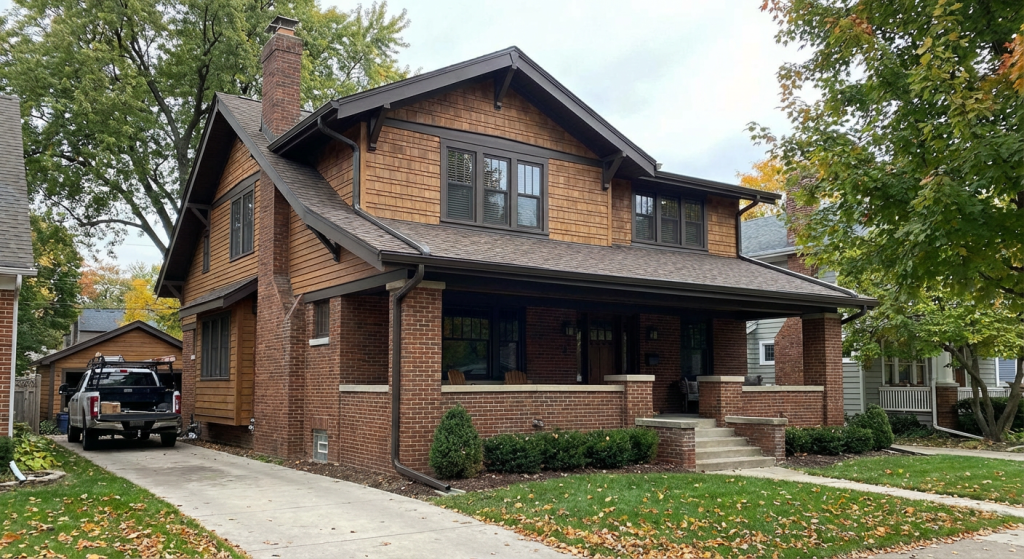
Seamless gutters are formed on-site to exact length—no seams except corners and downspout connections. Fewer seams means fewer leak points, cleaner appearance, and longer lifespan compared to sectional gutters pieced together every 10 feet.
Seamless gutter materials:
Aluminum
Copper
Steel
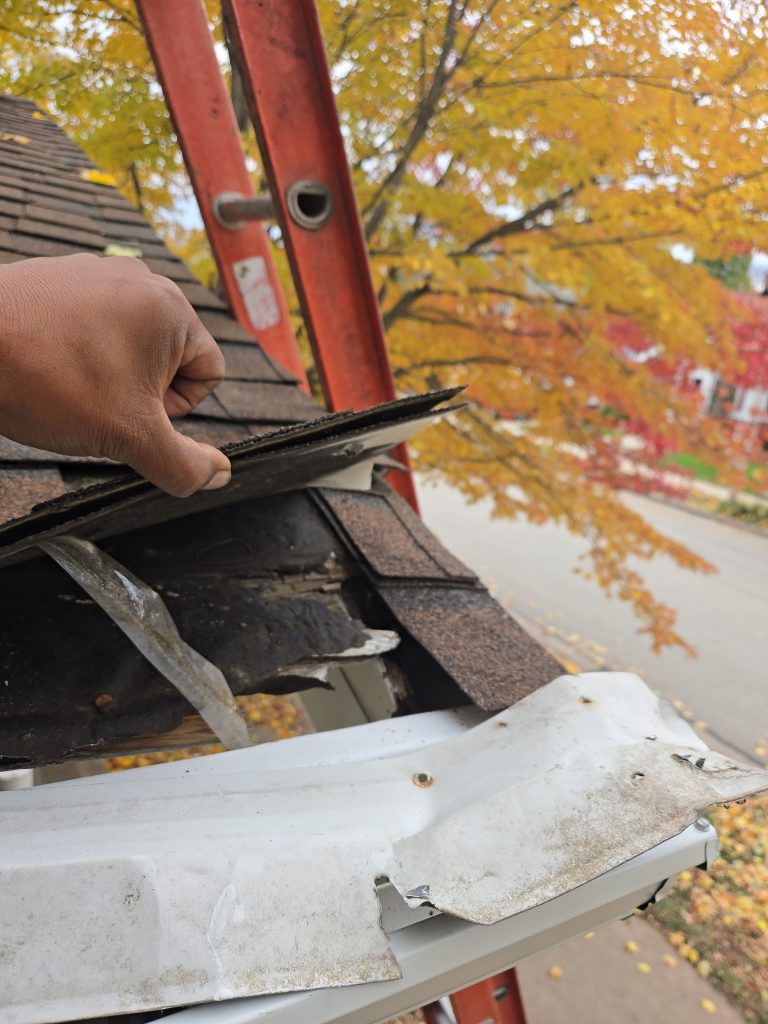
Gutters fail at predictable points: corners leak, sections sag, downspouts disconnect, end caps pop off, fascia rots and gutters pull loose. We repair specific failures instead of replacing entire systems when repair makes financial sense.
Leaking corners
Sagging sections
Separated seams
Damaged sections
Loose downspouts
Missing end caps
Overflow issues
Fascia damage
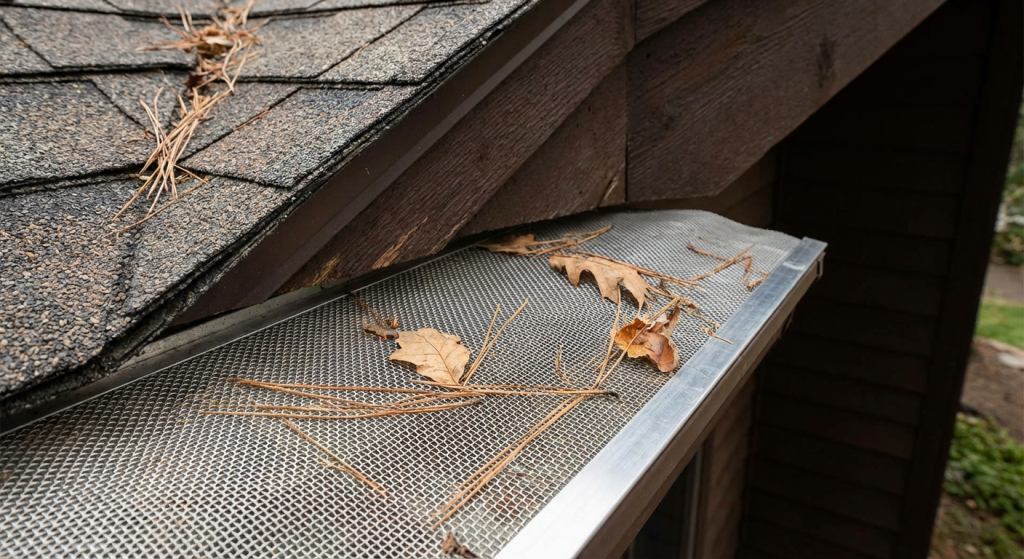
Gutter guards reduce cleaning frequency by keeping leaves, pine needles, and debris out of gutters while allowing water to flow through. They don’t eliminate cleaning completely (despite marketing claims) but they reduce cleaning from 2-4 times per year to once every 2-3 years.
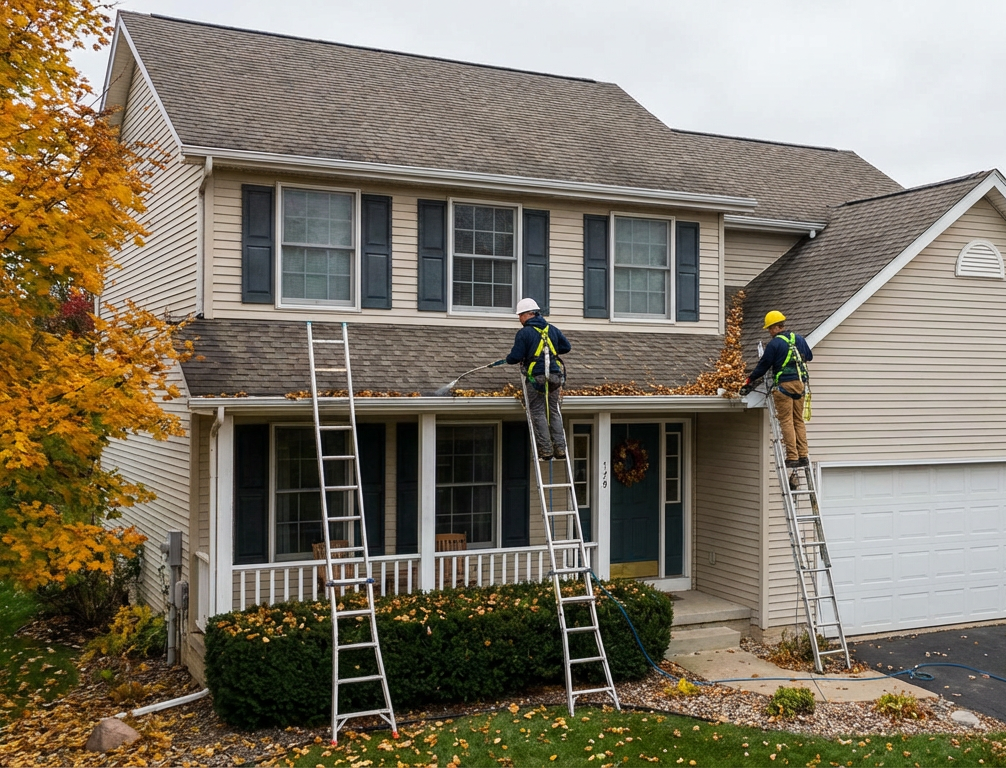
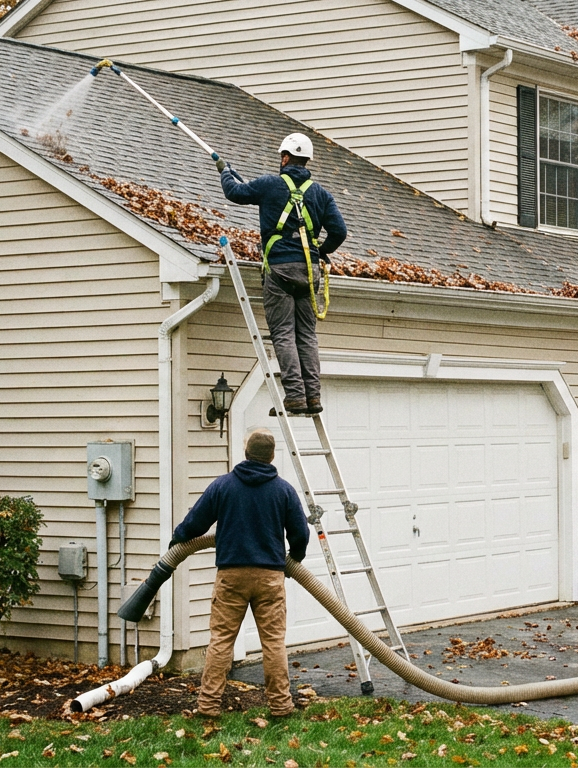
We remove leaves, pine needles, shingle grit, and debris from gutters and flush downspouts. Cleaning restores drainage and prevents overflow, foundation damage, and gutter weight stress.
Gutters need 1/4″ drop per 10 feet toward downspouts. Dead-level gutters pool water. Water sits, debris accumulates, mosquitoes breed, ice forms in winter. Eventually gutters overflow or rot fascia.
Some installers eyeball slope (“looks about right”). We measure and mark slope before installation. Quarter-inch per 10 feet looks almost level but drains completely.
40-foot gutter run with one downspout can’t handle heavy Wisconsin thunderstorm. Water backs up and overflows. Rule: one downspout per 30-40 feet maximum.
Adding downspouts costs $100-150 each installed but solves chronic overflow problems permanently.
5-inch gutters overflow on steep roofs or large roof areas. Upsizing to 6-inch gutters increases capacity 40%. Costs slightly more but ends overflow frustration.
Sectional gutters leak at every joint. Thin-gauge aluminum (.025) dents from ladder pressure. Hangers spaced 36″ apart sag under snow load. Corners sealed with silicone caulk leak within two seasons.
Budget installation uses cheap materials with minimal fasteners and fails predictably. We use .032 aluminum, hidden hangers every 24″, quality sealant, and proper fastening into solid wood.
We visit your property to measure all roof edges requiring gutters, count and note downspout locations, inspect fascia condition, assess roof pitch and tree coverage, and discuss color/style preferences.
We order custom-color gutters if needed (1-2 week lead time for special colors). Stock colors (white, brown, almond) install same-week usually.
We remove existing gutters carefully to avoid fascia damage, inspect fascia condition after removal, note and explain any rot or damage found, and haul away old gutters and debris.
We replace any rotted or damaged fascia boards, prime and paint new fascia to match, and ensure solid surface for gutter attachment. This step adds time and cost but is non-negotiable—gutters on rotted fascia fail quickly.
Form seamless gutters on-site to exact measurements, install hidden hangers at proper spacing and slope, hang gutters and verify drainage slope, seal all corners and connections with quality sealant, install end caps and outlets, and attach downspouts with proper fasteners.
Clean up all debris and material scraps, haul away old gutters and trash, and run water through system to verify drainage and check for leaks. We show you how system drains and point out downspout discharge locations.

We measure and mark slope before installation—1/4″ per 10 feet toward downspouts. Not eyeballed, not “close enough.” Measured. Gutters drain completely without standing water.
Old spike-and-ferrule hangers pull loose and create holes in gutter. We use hidden hangers that screw into solid wood (rafter tails or fascia), spaced every 24″ for strength. Gutters stay put during snow loads and Wisconsin weather.
Rotted fascia means gutters will fail. We identify fascia damage during estimate and repair it before installing gutters. Costs more upfront, prevents failure later.
Other contractors ignore fascia rot and install gutters anyway—system fails within a year and customer pays twice.
We calculate proper downspout quantity based on roof area and gutter length. If your roof needs four downspouts but you want three to save money, we explain exactly why overflow will happen and let you decide.
We won’t install inadequate systems that fail predictably.
.032-gauge aluminum (not .025 or thinner), quality gutter sealant (not cheap caulk that fails), and proper fasteners into solid wood (not just fascia face). Materials cost slightly more but systems last 25+ years instead of failing in 5-10.
Seamless aluminum gutter installed:
Average single-story ranch (120-150 linear feet): $900-1,500
Two-story house (200-250 linear feet): $1,600-2,500
Large two-story (300+ linear feet): $2,400-4,000
Pricing includes:
Additional costs:
Color choice doesn’t affect price (standard colors). Special-order colors may add $100-200 and 1-2 week lead time.
Seamless aluminum gutters: 20-30+ years with proper maintenance
Lifespan depends on:
✓ Material quality (.032 gauge lasts longer than .025)
✓ Installation quality (proper slope, adequate hangers)
✓ Maintenance (cleaned gutters last longer)
✓ Weather exposure (south-facing gutters deteriorate faster from sun)
✓ Fascia condition (rotted fascia causes premature failure)
Sectional gutters: 10-15 years before joints leak excessively
Copper gutters: 50+ years (expensive but extremely durable)
Most common failure: Corners and seams leak after 15-20 years. Often repairable by resealing. Complete replacement usually needed at 25-30 years when multiple sections fail simultaneously.
Technically yes. Practically difficult for quality result.
DIY challenges:
Seamless gutters – Requires gutter machine ($3,000-5,000) or buying pre-formed sections (which creates seams and defeats purpose).
Sectional gutters – Available at home centers, but you’ll have leak-prone seams every 10 feet and final result looks amateur.
Slope calculation – Getting correct slope along 40-foot run is harder than it looks. Too much or too little causes problems.
Fascia attachment – Finding rafter tails to screw into requires knowledge of framing. Screwing into just fascia board pulls out.
Height/safety – Working on ladder while holding 20-foot gutter section is legitimately dangerous without proper equipment and experience.
DIY makes sense for:
Hire professional for:
Reality: Most DIY gutter installations we replace lasted 3-5 years before problems required complete redo. Professional installation costs more initially but lasts 5-6x longer.
Minimum twice per year:
Fall cleaning (essential): Late October or early November after leaves drop. Absolutely critical in Wisconsin—leaf-clogged gutters freeze solid in winter and cause ice dams and gutter damage.
Spring cleaning: April or May after spring pollen, seed pods, and winter debris. Usually lighter than fall cleaning but necessary.
Additional cleanings needed if:
Pine trees nearby: Pine needles clog gutters quickly. May need cleaning 3-4 times per year.
Heavy tree coverage: Leaves accumulate faster. Monitor for overflow during rain—overflowing means cleaning is overdue.
Squirrel or bird activity: Animals build nests in gutters. Check and clean if you see animal activity.
Signs gutters need cleaning:
Gutter guards reduce cleaning to once every 2-3 years instead of twice annually. Guards cost $8-12/linear foot installed but save $150-300 annual cleaning cost. Break-even at 5-7 years, then pure savings.
Yes, but with caveats.
What gutter guards DO:
✓ Block most leaves and large debris
✓ Reduce cleaning frequency from 2-4 times per year to once every 2-3 years
✓ Prevent complete gutter clogs
✓ Make cleaning easier when you do clean (debris on top, not inside)
What gutter guards DON’T do:
✗ Eliminate cleaning completely (marketing lies)
✗ Block 100% of debris (shingle grit, pollen, tiny seeds still get through)
✗ Prevent ice dams (that’s insulation/ventilation issue)
✗ Work perfectly on every roof pitch and shingle type
Best guards (micro-mesh) block 95%+ of debris and work on most roof types. Cheaper guards (foam, brush, screen) are less effective and often create different problems.
Our honest recommendation:
Install gutter guards if:
✓ You have significant tree coverage
✓ Two-story house (dangerous to clean frequently)
✓ You’re tired of paying $200-400 twice a year for cleaning
✓ You’re physically unable to clean gutters yourself
Skip gutter guards if:
✗ Few trees nearby (minimal debris)
✗ You don’t mind cleaning yourself twice a year
✗ Budget is very tight
✗ You have someone clean gutters for $100-150 per visit
Bottom line: Quality micro-mesh guards work well and pay for themselves in 5-7 years of avoided cleaning costs. Cheap guards create more problems than they solve.
Most common causes:
Clogged with debris – Leaves, pine needles, shingle grit accumulate and block water flow. Solution: Clean gutters.
Improper slope – Gutters installed level or sloping wrong direction. Water pools instead of flowing to downspouts. Solution: Re-hang gutters at correct slope (1/4″ per 10 feet).
Too few downspouts – Long gutter runs with inadequate downspout quantity can’t handle water volume during heavy rain. Solution: Add downspouts.
Undersized gutters – 5-inch gutters on steep or large roof area overflow during heavy rain. Solution: Upsize to 6-inch gutters.
Downspout clogs – Gutters drain but downspouts are clogged with debris. Water backs up and overflows. Solution: Snake and flush downspouts.
Gutter sag – Sagging sections create low points where water pools and overflows. Solution: Add hangers and re-slope.
Extremely heavy rain – Even properly functioning gutters can overflow during severe thunderstorms (3+ inches per hour). If overflow only happens during worst storms, system is probably adequate.
Quick test: Run hose on roof during dry weather and watch gutters. If water overflows with garden hose, gutters are clogged, improperly sloped, or undersized. If water flows fine, your overflow only happens during extreme rain (acceptable).
Absolutely yes.
Gutters collect thousands of gallons of roof water during rain. If downspouts discharge at foundation instead of 6+ feet away, that water pools against basement walls and seeps through.
Common scenario: Homeowner has basement flooding, spends $8,000 on interior waterproofing, flooding continues. Problem is downspouts dumping at foundation. Fix: $200 in downspout extensions. Flooding stops.
Always check downspout discharge locations before spending money on basement waterproofing. If downspouts dump at foundation, extend them first. Simple, cheap, often solves problem completely.
We’ve seen $15,000 interior drain systems installed while downspouts dump directly at foundation. Contractor got paid, problem persists, homeowner wasted money.
Proper downspout discharge:
✓ Minimum 4-6 feet from foundation
✓ Downward slope away from house
✓ Discharge to drainage area (not neighbor’s yard)
✓ Underground burial if surface extensions are trip hazards
Heat escaping through roof melts snow. Meltwater refreezes at cold roof edge. Ice builds up and backs under shingles.
Ice dam process:
Ice dams damage:
Ice dam solutions:
Permanent fix (addresses cause):
Temporary fix:
What DOESN’T fix ice dams:
✗ New gutters (ice forms on roof, not in gutters)
✗ Gutter guards (guards don’t prevent ice)
✗ Larger gutters
Gutters don’t cause ice dams, but ice dams destroy gutters. We can install heat cables as band-aid solution, but real fix is insulation and ventilation. That’s different contractor (insulation company or roofer).
5-inch K-style gutters handle most Wisconsin residential applications.
Choose 5-inch if:
✓ Average roof pitch (4/12 to 6/12)
✓ Standard roof area per gutter run
✓ Budget-conscious
✓ No history of overflow problems
Choose 6-inch if:
✓ Steep roof pitch (8/12 or greater)
✓ Large roof areas draining to single gutter
✓ Valley dumps large water volume into gutter
✓ History of 5-inch gutters overflowing
✓ Heavy tree coverage (6-inch handles debris better)
6-inch gutters cost 10-15% more than 5-inch but provide 40% more capacity. Worth it for overflow-prone situations.
Most homes: 5-inch works fine. 6-inch is overkill.
Large homes, steep roofs, overflow problems: 6-inch prevents frustration.
We calculate roof area and pitch during estimate and recommend appropriate size. Sometimes mix—6-inch on steep sections, 5-inch on low-pitch areas.
Visual signs:
Physical test:
Poke with screwdriver – Solid wood resists pressure. Rotted wood is soft and screwdriver sinks in easily. If screwdriver penetrates more than 1/4″, wood is rotted and needs replacement.
Look from below – Check soffit (underside) for stains, sag, or rot. Fascia and soffit often rot together.
Common rot locations:
Fascia rot requires replacement before installing gutters. Gutters attached to rotted wood pull loose within months. Fixing properly means removing gutters, replacing rotted fascia, then reinstalling gutters.
Cost: $8-15 per linear foot for fascia replacement including material and labor. Necessary expense—can’t skip it.
At A Plus Help, we proudly provide professional handyman and home remodeling services to homeowners and businesses throughout Wisconsin’s Fox Valley. From residential handyman repairs in Appleton to commercial maintenance in Neenah, we bring the same level of care, attention to detail, and quality service wherever we go in the Fox Valley.
Stop watching water overflow and dump at your foundation. Or climbing ladder twice a year to clean gutters filled with soggy leaves. Or dealing with ice dams that rip shingles off and leak into your house.
A Plus Help installs seamless gutters that drain properly, repair failing systems instead of replacing when repair makes sense, and install gutter guards that actually reduce maintenance.
You want: