
Your house’s exterior paint does two jobs: it looks good, and it protects your siding from Wisconsin weather. When paint starts peeling, cracking, or fading to that weird chalky finish—it’s failing at both.
A Plus Help handles exterior painting throughout Appleton, Neenah, Menasha, and the Fox Valley. We’re talking proper surface prep (the part most painters skip), quality paint that holds up to our freeze-thaw cycles, and attention to detail that means clean lines, no drips, and paint that doesn’t peel off next spring.
Whether you need your whole house painted, just the trim refreshed, wood siding restored, or deck and fence staining—we handle it without the “we’ll be back when it stops raining” excuses that drag projects into next season.
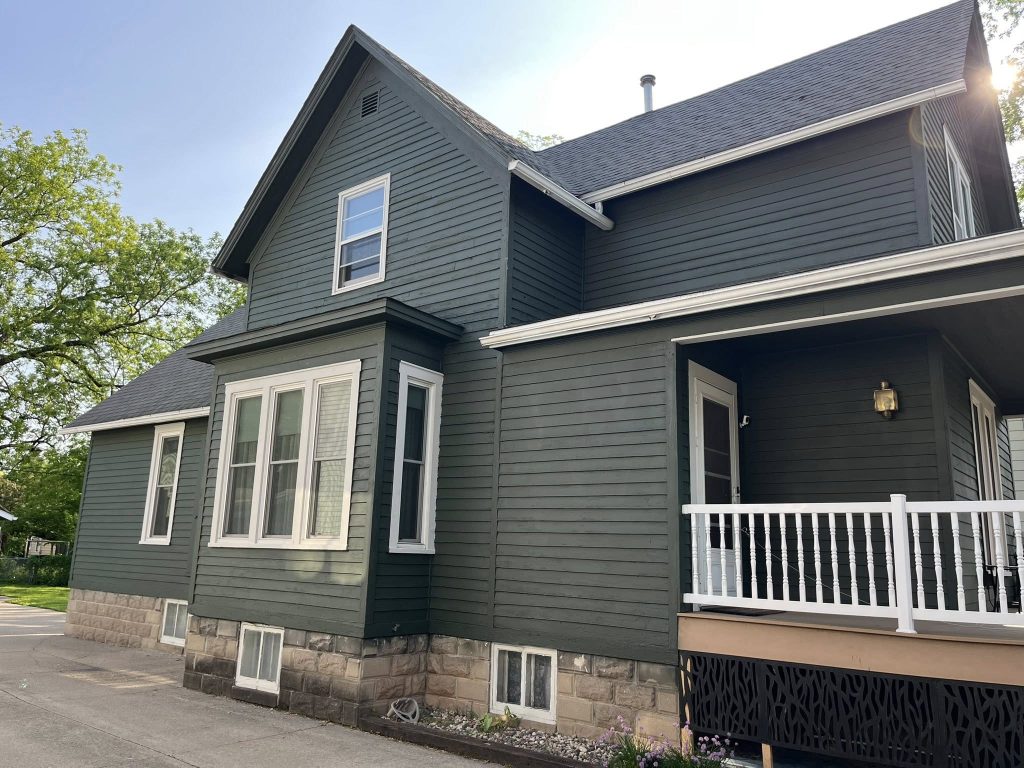
What we paint:
Siding – Vinyl (yes, vinyl can be painted with the right products), wood, fiber cement (Hardie board), stucco, aluminum, and composite materials. Each requires specific prep and paint types.
Trim – Window trim, door trim, fascia, soffits, corner boards, and decorative millwork. Trim often needs more attention than siding—it takes more weather exposure and shows damage first.
Doors – Entry doors, garage doors, storm doors. Proper door painting includes removing hardware, painting edges, and reinstalling without paint gumming up the works.
Shutters – Paint in place or remove for better coverage (depends on shutter type and condition).
Foundation – Exposed foundation or concrete block gets masonry paint that breathes and handles moisture.
Railings and columns – Porch railings, deck railings, decorative columns—anything attached to your house that needs protection and color.
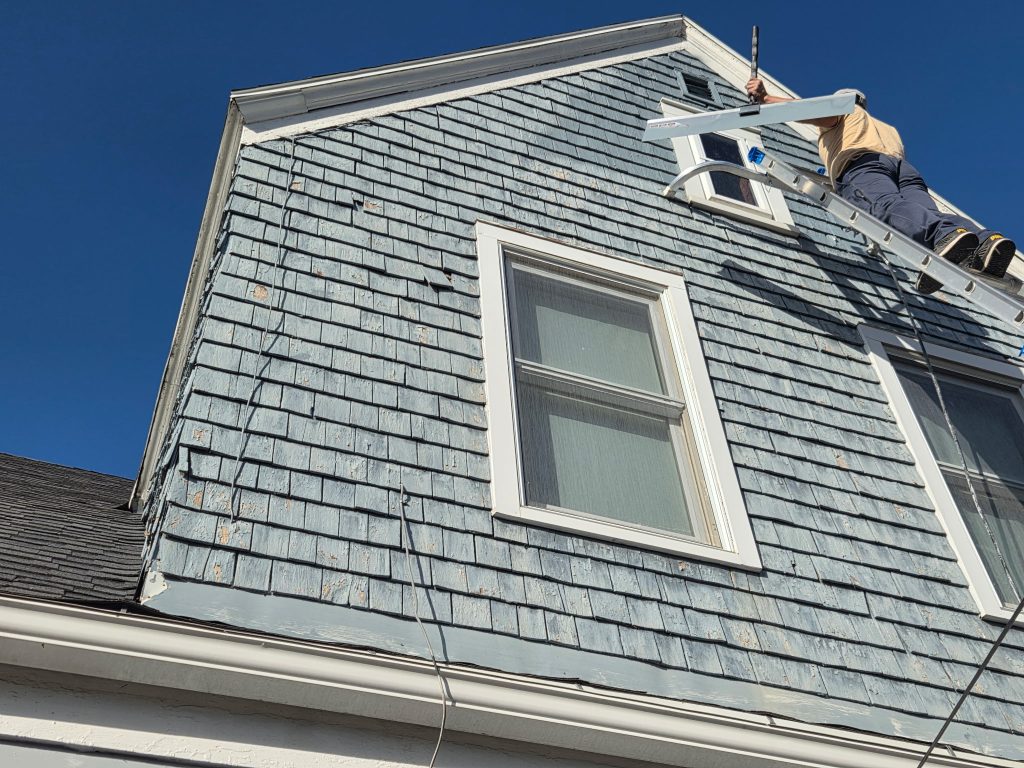
Sometimes your siding is fine but trim is peeling, faded, or just boring. Trim painting refreshes your home’s look without the cost of painting everything.
Trim-only projects include:
Window trim – Frame your windows with fresh color, make them pop, or go subtle with white/neutral.
Door and garage trim – Frame entries with contrasting color or classic white.
Fascia and soffits – Often first to show weather damage because they’re exposed to driven rain and ice dams.
Corner boards – Vertical trim at corners—painting these in accent color adds dimension.
Decorative millwork – Corbels, brackets, dentil molding—architectural details that deserve to stand out.
Accent colors – Shutters, doors, or trim in contrasting color. We help you choose combinations that work (not just “I like blue and also orange”).
Trim painting requires steadier hand and more detail work than siding—but the impact per dollar is huge for curb appeal.
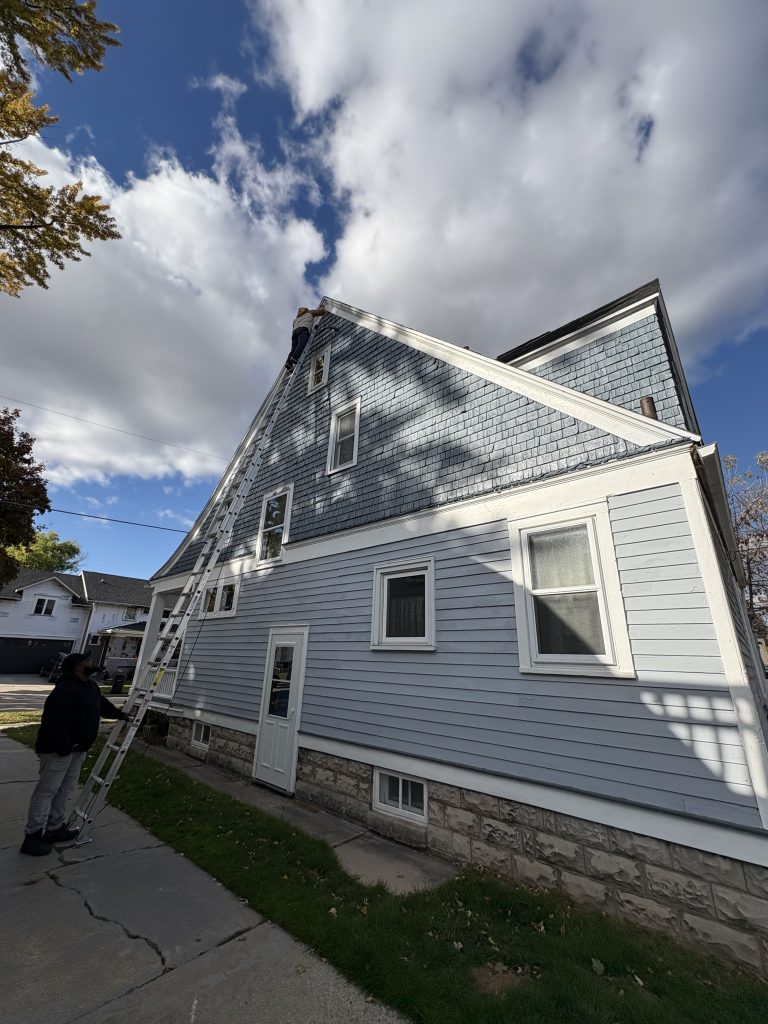
Wood siding has character that vinyl can’t match—but it needs proper maintenance or it rots, warps, and looks terrible.
Wood siding prep is different:
Damage assessment – We identify rotted boards, loose siding, failed caulk, and structural issues. Can’t paint over rot—it needs replacement first.
Board replacement – Rotted or damaged sections get cut out and replaced with matching wood before painting.
Deep cleaning – Power wash (carefully—too much pressure damages wood), remove mildew, strip loose paint.
Sanding – Rough areas, exposed wood, and peeling edges get sanded smooth.
Priming – Oil-based primer on bare wood. Blocks tannins, seals wood, prevents future peeling. We prime ALL exposed wood, including cut ends of replacement boards.
Caulking – Fill gaps at corners, around windows, between siding and trim. Quality caulk (phenoseal or better) that flexes with wood movement.
Painting – Two coats of premium acrylic latex (flexible, breathable, holds color) or oil-based paint for traditional look and maximum durability.
Back-priming – For replacement boards, we prime the back and edges before installation. Prevents moisture absorption that causes rot.
Wood siding painted properly lasts 10-15 years. Rushed jobs last 2-3 years before peeling starts again.
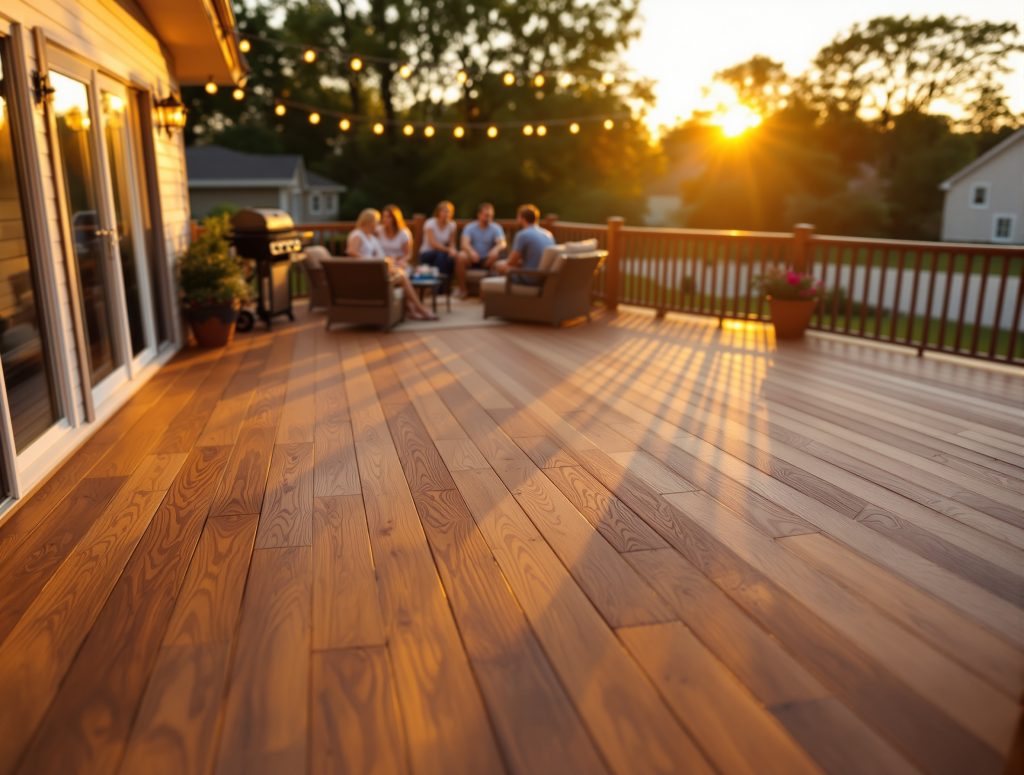
Decks and fences take beating from sun, rain, snow, and foot traffic. Staining protects wood and keeps it looking good instead of gray and splintered.
Deck staining:
Cleaning – Power wash to remove dirt, mildew, graying, and old failing stain. Might need brightener/cleaner solution for heavily weathered wood.
Sanding – Rough spots, splinters, and raised grain get sanded. Smooth surface = better stain absorption.
Repair – Replace rotted boards, tighten loose fasteners, fix structural issues before staining.
Staining – We use semi-transparent or solid stains depending on wood condition and your preference. Semi-transparent shows wood grain, solid covers like paint.
Two coats – First coat seals and protects, second coat adds color depth and UV protection.
All surfaces – We stain deck boards, railings, stairs, and underneath (often forgotten—moisture comes from below too).
Drying time – Needs 48 hours dry weather after staining. We watch weather forecasts and schedule accordingly.
Fence staining:
Cleaning – Power wash both sides (yes, both—back side gets weather too).
Staining – Spray application for efficiency, back-brush for better penetration into wood grain.
Gates and hardware – Remove or mask hardware, stain gates separately for better coverage.
Timing – Fence staining is faster than deck staining (no horizontal walking surfaces), but still needs proper prep.
Stained decks should be re-stained every 2-4 years depending on traffic and sun exposure. Fences last 3-5 years between staining.
Exterior paint isn’t decoration—it’s your home’s first defense against moisture, UV damage, temperature swings, and the freeze-thaw cycles that destroy unprotected surfaces.
Wood rots. Fiber cement absorbs moisture and fails. Even vinyl gets brittle and cracks. Paint (or stain) keeps water out and extends your siding’s life by decades.
Fresh exterior paint delivers best ROI of any home improvement—typically recovering 50-80% of cost when you sell, often more in competitive markets.
Plus: your house looks like you care about it. Neighbors appreciate it. You appreciate it every time you pull in the driveway.
Exterior painting forces close inspection of your home’s exterior. We spot rotted wood, failed caulk, moisture damage, pest damage, and other issues while they’re still small and fixable.
Cheaper to replace three rotted trim boards during painting than replace entire wall sections when rot spreads.
Tired of your home’s color? Painting costs $3,000-8,000. New siding costs $15,000-35,000. Paint is the budget-friendly facelift.
We visit your property, assess surface condition, measure square footage, and discuss color preferences. We identify any repairs needed before painting and provide a detailed written estimate. Color help included—we bring samples and help you choose combinations that actually work with your roof, landscaping, and neighborhood.
Exterior painting is weather-dependent, so we schedule during dry periods and watch 5-day forecasts to ensure adequate drying time. We move outdoor furniture and decorations away from the house, cover landscaping and walkways, and protect windows and hardware with tape and plastic. We set up ladders, scaffolding, or lifts for safe access to all areas.
This is where quality separates from cheap. We power wash to remove dirt, mildew, and loose paint, then let surfaces dry completely for 24-48 hours. We hand-scrape any remaining peeling paint, sand rough areas smooth, replace rotted wood, fill cracks and holes, caulk gaps around windows and trim, and prime bare wood and damaged areas.
We cut in around all trim, windows, and doors, then roll or spray large sections. First coat goes on, then we allow proper drying time (4-24 hours depending on conditions). Second coat provides color depth and maximum protection—dark colors over light sometimes need a third coat for even coverage.
We clean any overspray or drips and touch up missed spots or thin areas. We ensure crisp lines where colors meet and remove tape carefully while paint is slightly tacky to prevent peeling.
We remove all drop cloths and protective coverings, clean up paint chips and debris, and return moved items to their original spots. We do a walkthrough with you to ensure satisfaction before we're done. Leftover paint goes home with you for future touch-ups, labeled with color name and where it was used.

We spend the time on surface prep that makes paint last. Power washing, scraping, sanding, priming—the boring stuff that cheap painters skip.
Result: paint that lasts 10-15 years, not 3 years.
We use Sherwin-Williams Duration, Emerald, or Benjamin Moore Aura exterior paints. These aren’t the cheapest—they’re the best.
Why premium paint matters:
Cheaper paint saves $200 on materials and costs $3,000 when you repaint in four years instead of twelve.
General contractor license, liability insurance, workers’ compensation. We carry ladders up to 40′, use scaffolding for high work, and follow safety protocols.
Falls from ladders hurt. Damage from dropped equipment is expensive. Insurance matters.
Painting is messy, but we contain the mess. Drop cloths, careful masking, overspray control, daily cleanup.
Your landscaping doesn’t get paint-spattered. Your windows stay clean. Your driveway doesn’t become a paint-mixing palette.
Typical ranges for Appleton area:
Small home (1,000-1,500 sq ft): $3,000-5,000
Medium home (1,500-2,500 sq ft): $5,000-8,000
Large home (2,500-4,000 sq ft): $8,000-13,000
Very large or complex homes: $13,000+
Pricing factors:
We provide exact pricing after seeing your specific home.
Typical timelines:
Small home: 3-5 days
Medium home: 5-8 days
Large home: 8-12 days
Complex or damaged homes: 2+ weeks
Timeline includes prep, priming, two coats, and drying time between coats.
Weather delays add time. We can’t control rain. We adjust schedule as needed.
Best: Late spring through early fall (May-September in Wisconsin).
Ideal conditions: Temps between 50-85°F, low humidity, no rain in forecast for 48 hours after painting.
Worst: Winter (paint doesn’t cure below 50°F), rainy periods, extreme heat.
We paint March-November depending on weather. December-February is indoor painting season.
With premium paint and proper prep:
Wood siding: 10-15 years
Fiber cement: 12-17 years
Stucco: 12-15 years
Brick trim/accent painting: 15-20 years
Trim (high-exposure areas): 7-12 years
Factors that shorten paint life:
Yes, with the right paint. Vinyl siding can be painted using vinyl-safe paints that won’t cause siding to warp from heat absorption.
Rules for painting vinyl:
Painting vinyl extends its life and updates color without replacement cost.
No. Exterior painting happens outside—we don’t need house access (except occasionally for water or bathroom).
As long as we can access exterior perimeter, you can leave for work, run errands, or go on vacation.
We communicate via text/phone with daily updates.
We watch forecasts and don’t paint if rain is imminent. Paint needs 4-6 hours to dry before rain (longer for full cure).
If surprise rain happens mid-project:
We cover work areas if rain threatens, but best practice is don’t paint when weather is questionable.
We take precautions: drop cloths around perimeter, careful power-washing (not aimed at bushes), cover plants near work areas.
Occasional overspray happens despite precautions—we clean it immediately or replace damaged plants if we cause damage.
Most projects finish with zero landscaping damage.
We help with:
General rules:
Popular Wisconsin choices: grays, blues, whites, greiges. Earth tones work with wooded lots.
Generally no. Most exterior paints require minimum 50°F for proper curing. Wisconsin winter doesn’t cooperate.
Exceptions:
We schedule exterior painting April-November. Interior painting happens year-round.
At A Plus Help, we proudly provide professional handyman and home remodeling services to homeowners and businesses throughout Wisconsin’s Fox Valley. From residential handyman repairs in Appleton to commercial maintenance in Neenah, we bring the same level of care, attention to detail, and quality service wherever we go in the Fox Valley.
Stop watching that paint peel. Or living with the color the previous owner chose in 1987. Or wondering if that water stain means your siding is rotting underneath.
A Plus Help provides professional exterior painting throughout Appleton and the Fox Valley—proper prep, premium paints, and attention to detail that means your paint job lasts a decade, not three years.
You want: